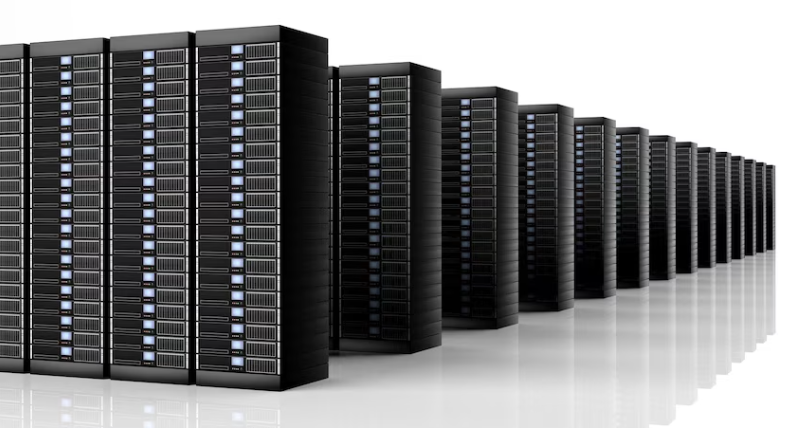
Data growth is no longer measured in terabytes. For modern enterprises, the new baseline is the petabyte. Whether it is training massive AI models, rendering 8K video effects, or sequencing genomes, the sheer volume of unstructured data being generated is staggering.
Storing this data is one challenge, but accessing it is an entirely different battle. Traditional storage architectures often hit a performance wall when thousands of users or applications try to read and write data simultaneously. This is where the bottleneck stifles productivity.
To solve this, organizations are turning to Scale out nas. Unlike legacy systems that eventually choke under pressure, this architecture is designed to handle high-concurrency workloads at petabyte scale. But how exactly does it manage to keep traffic flowing when millions of requests hit the system at once?
The Problem with Traditional NAS Storage
To understand the solution, we first have to look at the limitations of the predecessor. Traditional NAS Storage (often called "scale-up" NAS) operates on a controller-based architecture. You have a pair of controllers (the brains) managing a set of disk shelves (the capacity).
When you need more space, you add more shelves. However, when you need more performance, you are stuck. All data traffic must pass through those original controllers. As you add more capacity and more users, those controllers become a funnel. Eventually, the funnel overflows—latency spikes, throughput drops, and your expensive high-performance computing (HPC) cluster sits idle waiting for data. This is precisely the limitation that Scale Out NAS architectures are designed to eliminate by distributing performance across multiple nodes instead of relying on a single bottleneck.
At a petabyte scale, this single point of contention is unacceptable. You cannot service parallel requests from thousands of clients through a single "doorway."
The Scale-Out Difference: Linear Performance
Scale-out NAS changes the geometry of the problem. Instead of just adding storage shelves, you add "nodes." Each node contains its own storage, but importantly, it also contains its own compute power (CPU), memory (RAM), and network interface.
When you cluster these nodes together, they act as a single logical system. If you double the number of nodes, you don't just double your capacity; you double your processing power and network bandwidth.
This architecture enables linear performance scaling. As your data grows to petabytes, your ability to serve that data grows with it. This creates a massive pool of resources that can handle parallel I/O (Input/Output) operations without creating a central bottleneck.
How Parallel Reads and Writes Work?
The magic of scale-out architecture lies in how it handles data placement and retrieval. It doesn't treat a file as a single block sitting on a single disk. Instead, it utilizes intelligent distribution.
Data Striping and Sharding
When a large file is written to a scale-out system, the software automatically breaks that file into smaller chunks, or "stripes." These chunks are then distributed across multiple nodes and drives within the cluster.
For example, if an autonomous vehicle uploads a massive 10GB log file, the system might write the first chunk to Node A, the second to Node B, the third to Node C, and so on. This happens simultaneously. Because multiple nodes are accepting data at the same time, the write speed is the aggregate bandwidth of all those nodes combined, rather than the speed of a single disk controller.
Parallel Reads
The same principle applies to reading data. When a client (like a GPU cluster) requests that 10GB file, it doesn't have to pull the entire stream from one location. It can pull chunk 1 from Node A, chunk 2 from Node B, and chunk 3 from Node C—all at the exact same time.
This parallelism allows the network to saturate the client's bandwidth capabilities. It transforms a single lane country road into a twenty-lane superhighway.
Distributed Metadata
In storage systems, metadata is the data about the data (filenames, permissions, creation dates, directory structures). In traditional NAS, metadata operations are often the silent killer of performance. If thousands of clients ask "where is file X?" at the same time, the central metadata server can crash.
Advanced Scale out nas systems use distributed metadata. They spread the directory information across all nodes in the cluster. No single node is responsible for knowing where everything is. This eliminates the metadata bottleneck, allowing the system to handle millions of file lookups per second without breaking a sweat.
The Role of the Client
In the most efficient scale-out implementations, the client machine is "cluster-aware."
In older systems, a client would talk to a specific IP address (a specific head node). That head node would act as a traffic cop, redirecting the request to the data. This extra hop adds latency.
Modern scale-out file systems often use a specialized client or protocol that understands the map of the cluster. The client knows exactly which nodes hold the stripes of data it needs. It can bypass any "traffic cop" and open direct, parallel connections to every relevant storage node. This is often referred to as parallel file system access, and it is essential for achieving high throughput at petabyte scale.
Managing the "Thundering Herd"
One of the most difficult scenarios in storage is the "thundering herd" problem. This occurs when a massive compute job starts—for example, a financial modeling simulation—and thousands of compute cores simultaneously try to read the same reference dataset.
A standard NAS Storage appliance would queue these requests, causing massive delays.
A scale-out system handles this through caching and replication. Since the system has RAM distributed across dozens or hundreds of nodes, it can cache frequently accessed "hot" data across the entire cluster. When the thundering herd arrives, the requests are served from the high-speed memory of multiple nodes simultaneously, rather than hitting the slower mechanical disks or flash drives.
Use Cases Driving the Need for Parallel I/O
While any large organization can benefit from better storage performance, three specific sectors are driving the adoption of this technology:
1. Artificial Intelligence and Machine Learning
Training AI models involves feeding GPUs millions of small files (images, text snippets) or massive video files. GPUs are incredibly expensive resources; if they have to wait for storage, money is being wasted. Parallel I/O ensures the storage layer can feed data to the GPUs as fast as they can process it.
2. Media and Entertainment
Rendering animated movies or editing 8K video requires massive throughput. A single frame of a high-resolution movie can be huge, and editors need to scrub through timelines without dropped frames. Scale-out NAS allows multiple editors to work on the same massive project files simultaneously without lag.
3. Life Sciences
Genomic sequencing generates enormous datasets. A single human genome can consume hundreds of gigabytes. Research institutions often have to process thousands of these sequences in parallel to find patterns in DNA. NAS storage provides the necessary performance and concurrency to handle these massive datasets efficiently, enabling researchers to complete analyses in hours rather than weeks.
Future-Proofing with Scale-Out
The defining characteristic of the digital era is that data never stops growing. An architecture implemented today needs to work five years from now when the dataset has tripled.
Scale out nas offers this longevity. It decouples the storage media from the architecture. You can start with a cluster of 5 nodes. As your data reaches petabyte scale, you can expand to 50 nodes. You can mix and match generations of hardware, retiring old nodes and adding new, faster ones without taking the system offline.
By mastering parallel reads and writes, scale-out architecture turns storage from a passive warehouse into an active performance engine. It ensures that no matter how large the data lake grows, the data within it remains instantly accessible, unlocking the full potential of high-performance computing.