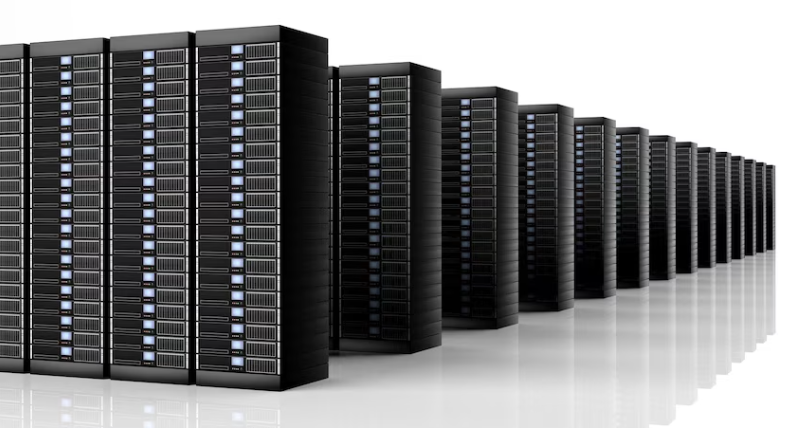
For decades, the data center landscape was dominated by a familiar giant: the monolithic storage controller. It was a centralized, powerful, and expensive piece of hardware that dictated how organizations managed their growing data needs. But as data volumes exploded from gigabytes to petabytes and beyond, the cracks in this traditional architecture began to show.
In the modern enterprise, agility and scalability aren't just buzzwords; they are survival necessities. The rigid structures of the past are giving way to a more flexible, resilient approach. We are witnessing a fundamental shift in storage architecture—a move away from the limitations of dual-controller systems toward the boundless potential of distributed nodes. This isn't just an upgrade; it's a complete reimagining of what an Enterprise NAS can be.
This architectural evolution solves the critical bottlenecks that have plagued IT administrators for years, offering a path to linear performance scaling and unprecedented reliability. Let's explore how we got here, why the old ways are failing, and how distributed node architecture is redefining the future of data storage.
The Era of the Monolith: Dual-Controller Architectures
To understand where we are going, we must look at where we started. Traditional Enterprise NAS systems were built on a "scale-up" architecture. At the heart of this design sat the dual-controller unit—two powerful brains responsible for managing all data traffic, RAID calculations, and storage protocols.
This design served the industry well when data growth was predictable and linear. You bought a chassis, filled it with drives, and let the controllers do the heavy lifting. If a controller failed, the second one took over (failover), ensuring high availability.
The Limitations of Scale-Up
However, this centralized approach has inherent flaws that become glaringly obvious at petabyte scale:
Performance Bottlenecks: No matter how many drives you add to a monolithic system, all data must pass through the same pair of controllers. Eventually, you hit a performance ceiling. The controllers become a bottleneck, unable to process I/O requests fast enough to keep up with modern applications.
The "Forklift Upgrade" Problem: When you max out the capacity or performance of a traditional NAS system, your only option is often a "forklift upgrade." This means ripping out the old hardware and replacing it with a bigger, more expensive unit. It’s disruptive, costly, and inefficient.
Limited Cache Coherency: In dual-controller systems, keeping the cache synchronized between the two nodes is critical but complex. As systems grow, maintaining this coherency consumes significant resources, further degrading performance.
Enter the Distributed Node Architecture
The solution to the monolithic problem is "scale-out" architecture, realized through distributed nodes. Instead of relying on two central controllers, this modern approach uses software-defined storage to cluster multiple nodes together into a single, unified namespace.
In a distributed Enterprise NAS environment, every node you add brings its own compute (CPU), memory (RAM), and network resources along with storage capacity. This fundamental difference changes the equation entirely: performance now scales linearly with capacity.
How Distributed Nodes Work
Imagine a team of workers. In the monolithic model, you have two supervisors trying to manage an ever-growing pile of work. In the distributed model, every new worker you hire is self-sufficient and capable of managing their own workload while coordinating with the group.
This architecture distributes data and metadata across all nodes in the cluster. When a client requests a file, the system retrieves data chunks from multiple nodes simultaneously. This parallel processing capability allows the system to saturate network bandwidth efficiently, far surpassing the throughput limits of dual-controller designs.
Key Benefits for the Modern Enterprise
The shift to distributed nodes isn't just about raw speed; it addresses the core operational challenges faced by today's IT leaders.
1. Linear Scalability
This is the holy grail of storage. Need more space? Add a node. Need more performance? Add a node. The system aggregates the resources of the new hardware automatically. There is no performance penalty for growth; in fact, the cluster often gets faster as it gets bigger because there are more CPUs and RAM available to handle I/O requests.
2. Unmatched Resilience and Self-Healing
In a traditional NAS system, a double drive failure or a dual controller failure can be catastrophic. Distributed architectures use erasure coding across nodes to protect data. If a drive—or even an entire node—fails, the system remains online and accessible. The cluster automatically "heals" itself by rebuilding the missing data segments onto the remaining nodes in the background, without requiring urgent intervention or downtime.
3. Elimination of Silos
Managing multiple distinct NAS filers creates "islands of storage" or data silos. This fragments data, making it hard to manage, back up, and analyze. A distributed NAS system presents a single, massive pool of storage (often reaching into the exabytes) that is easy to manage under a global namespace. Administrators can apply policies, quotas, and security settings once, and they apply everywhere.
4. Hardware Freedom
Because the intelligence lies in the software rather than proprietary hardware controllers, distributed architectures often allow for more hardware flexibility. This software-defined approach means organizations aren't locked into a single vendor's specific hardware refresh cycle. They can adopt newer technologies (like NVMe flash) as they become available, mixing and matching node generations within the same cluster.
Use Cases Driving the Change
Who needs this level of power? While any organization can benefit from simplicity, specific workloads demand the architecture of a distributed NAS system.
Media and Entertainment: 4K and 8K video editing requires massive throughput. Distributed nodes allow multiple editors to stream high-bitrate footage simultaneously without dropped frames.
Genomics and Life Sciences: DNA sequencing generates enormous datasets that need to be accessed quickly for analysis. The parallel nature of distributed storage dramatically reduces time-to-insight.
AI and Machine Learning: Training AI models requires feeding GPUs with vast amounts of data at high speeds. A distributed architecture ensures the storage layer doesn't become the bottleneck in the AI pipeline.
Video Surveillance: Modern surveillance systems record dozens or hundreds of high-definition streams 24/7. Distributed NAS provides the deep, scalable, and reliable repository required for retention compliance.
Challenges to Consider
Transitioning to a distributed architecture is a strategic move, but it requires planning.
Network Dependance: Because nodes communicate constantly to synchronize data and metadata, the backend network becomes critical. A robust, low-latency network switch infrastructure (often 25GbE or 100GbE) is a prerequisite for success.
Minimum Entry Point: Unlike a small entry-level NAS, distributed clusters typically require a minimum number of nodes (often three or four) to establish the cluster and ensure data protection. This might present a higher initial cost for very small deployments, though the TCO usually favors distributed systems as data grows.
Embracing the Future of Storage
The rigid, dual-controller boxes of the past served us well, but they cannot support the data-intensive future we are building. The transition to distributed node architecture represents the maturation of the Enterprise NAS market. It aligns storage infrastructure with the demands of modern applications: infinite scale, uncompromising reliability, and software-defined flexibility.
For IT leaders, the choice is becoming clear. To support the next decade of data growth, we must stop thinking in terms of boxes and controllers, and start thinking in terms of clusters and nodes. By adopting this new architecture, organizations can finally stop managing storage limitations and start unleashing their data's potential.